
In a recent post I described artistic affinity and used my attraction to gray as an illustration. This may explain why I don’t grow tired of making faces on pavement year after year, but it doesn’t explain my affinity for found object portraiture. Let me use this space as a workbench to try and figure out how to state the deeper affinities that drive all of my art.
My Affinity
Facial expressions are the language of emotion. As pack animals, we are incredibly good at knowing how someone feels internally by reading their external body language. Notice the common verb reading to describe the process of seeing someone and decoding their emotional state. I love looking at my faces after I have made them and “reading” the emotion they are projecting. I usually have some idea about it in the moment of making it but I work so fast and under such ephemeral conditions, that I don’t spend much time on that part during the making of them. I have a strong intuitive sense I got it, or I might keep going. I know when a face is blah, or worse, inauthenticc. But it’s happening almost unconsciously on my part. I don’t intentionally bring my consciousness to it until I look at later on my computer screen. In this sense, my process accommodates to two versions of my inner artist, the hunter/gatherer and the cook. Each suits my affinities.
The Hunter/Gatherer
I love to walk around and notice things. I love having a task while I do it. The task is called find supplies and find something unique we can use to make a face. I just really really enjoy this. It’s natural and easy. This hunter/gatherer is less interested in what is going to happen to the face that she makes and more interested in just hunting it and gathering it. The thrill is being finely attuned to one’s surroundings.
The Cook
The cook is interested in what has been brought to her. She is selective and is looking for a harmonious combination of good composition, lighting and facial expression. She wants a very definitive emotion to be coming across. The face should suggest a story, a story which explains the emotion. Many faces don’t meet these requirements and don’t get shared. The cook wants to share her creation. The cook is thinking about who will eat her food. She wants to please and delight them. The hunter/gatherer only wants to please the cook.
The Attraction
The attraction is not really towards the object, but rather the adventure and the reward. I feel rewarded by creating an expression. I like people. I like stories. Facial expressions are very short stories told in the medium of the flesh when real and the medium of pavement when I do it. I don’t get bored, or tired, or done with making faces. Each new one delights me. That’s not strictly true. Some faces are too dumb or too irritating. I don’t bother taking photos of those. Or if I do, I don’t share them. So, the most important part of the process is creating an expression that I find fascinating. Most of the time it’s because I relate to the expression but occasionally it’s because I don’t. Either way is acceptable, as long as I feel an attraction.
I enjoy the work of several artists who make designs out of found objects, rather than faces. They are so beautiful. I enjoy seeing their new work every week. I can perceive and appreciate what they are going and yet I feel no compulsion to try it. It’s that compulsion that I think is attached to affinity. It’s something you just can’t stop. Maybe you are only doing it in your head, you haven’t started acting on it, but it’s happening. It’s very hard to get going when there is no affinity. That’s just drudgery. Art must never be drudgery. Art can’t be a drudgery. It’s cancels itself out.
The Orphan Statement
I started this post in September of 2020. Some posts I dash off, mostly if they are about a specific moment in time. But essays about my most deep-seated theories take longer to craft. I am brutal on my writing and throw stuff away constantly. If I think I still need to explore an idea, but it has been removed from its originating paragraph, I add it to the bottom with the idea that I will review it before I finalize the post. The sentence below remains, never incorporated but never rejected. It does not fit into the structure of this blog post, but I think it deserves a moment. If we re-ask the title; What is Your Affinity?, this is a good answer for me:
My affinity is an intersection of my consciousness of being conscious, a sense of mystery and a sense of mortality. When I see something in the bullseye of that triad, I engage with it.
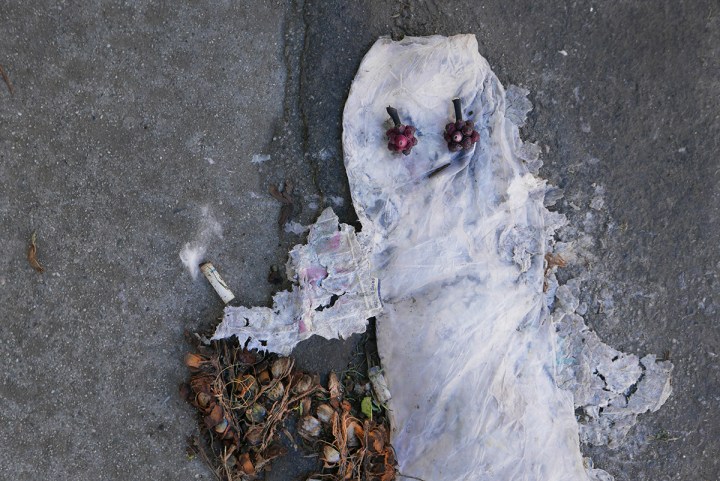


 Sidewalk Face